What is keyword research?
Finding the words and phrases people type into search engines about your topic, then judging which are worth targeting. Good research tells you what to write, which page should answer each search, and where you can realistically compete.
How do I do keyword research?
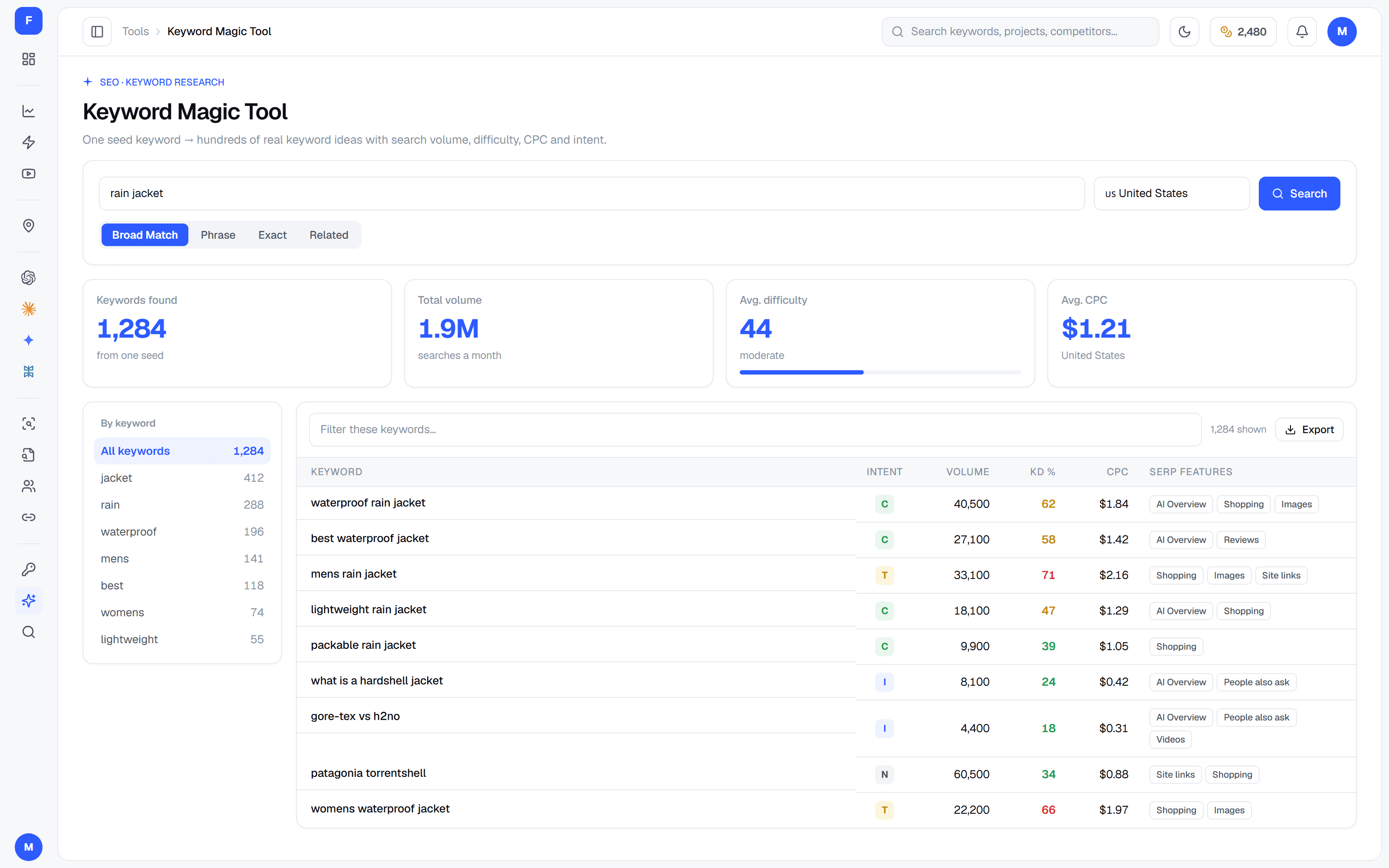
Start with a seed keyword, expand it into a long list, then judge each keyword on volume, difficulty, intent and relevance to your business. Group what is left into topics and give each topic one page to own.
How do I read volume, difficulty, CPC and intent?
Volume is the average monthly searches. Difficulty estimates how hard it is to reach the first page, shown as easy, medium or hard. CPC is what advertisers pay per click — a good sign of commercial value. Intent says what the searcher wants: to learn (informational), to reach a specific site (navigational), to compare (commercial) or to buy (transactional).
How do I find long-tail keywords?
Look for phrases of three or more words and for questions — how, what, best, near me. They have less volume each but clearer intent and less competition, which makes them the quickest wins for a newer site. Filter the list by text or a difficulty ceiling to surface them.
How many keywords should I target per page?
One main keyword per page, plus the close variants and questions that share its intent. If two pages chase the same keyword they compete with each other — word groups make that overlap easy to spot before you write.
Where do the search volumes come from?
From a keyword database — not a language model's guess. Volumes are monthly averages, so treat them as a guide to relative demand; Search Console shows the impressions your own pages actually get.
Is the keyword research tool free?
No. It comes with any paid plan or credit pack and runs on your credits; the free plan covers Google rank tracking only.
How much does a search cost?
35 credits for 100 keywords, or 190 credits for the full page of results.
Is there a free plan?
Yes. The free plan covers Google rank tracking with 100 credits every month, refilled automatically, with no credit card. Every other tool comes with any paid plan, from $19/month for 2,000 credits, or any credit pack.
Do I need a separate subscription for this tool?
No. Every FreeSERP tool draws from the same credit balance. The free plan's credits cover Google rank tracking; everything else — the SERP checker, site audits, competitor analysis, keyword research, the keyword score checker, internal link analysis, AEO & GEO audits and Google Maps audits — needs a paid plan or a credit pack.